Explore Lombard Street: Cable Cars, Famous Curves, and Nearby Attractions
· updated
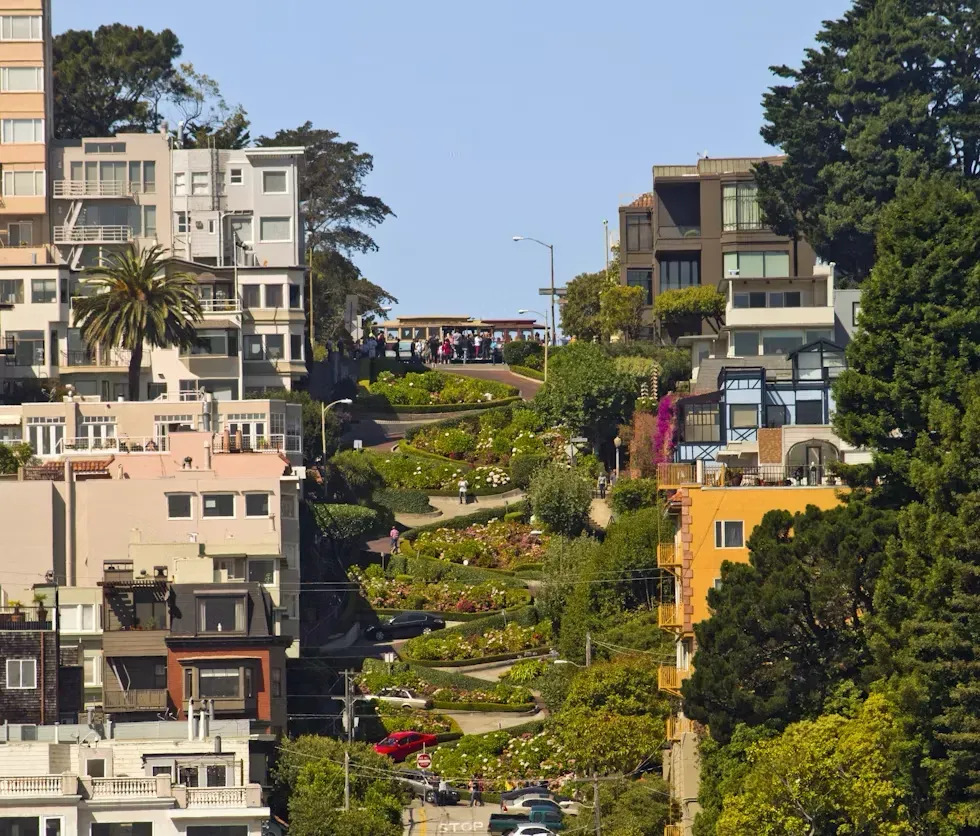
Despite its popular nickname, Lombard Street is not technically the most crooked street in San Francisco. Vermont Street in Potrero Hill is often considered more winding. What makes the Russian Hill section of Lombard Street special is its combination of eight hairpin turns, brick paving, landscaped curves, historic residences, and memorable views toward San Francisco Bay.
Why Is Lombard Street Famous?
The best-known section of Lombard Street descends the eastern side of Russian Hill. Its eight closely spaced turns create a striking zigzag pattern that has appeared in countless photographs, films, travel programs, and postcards.
The curves were introduced in the 1920s to make the steep hill easier for automobiles to navigate. Rather than sending vehicles directly down the grade, the switchbacks created a slower, more manageable descent. Today, cars still travel through the block in one direction, from west to east and downhill from Hyde Street toward Leavenworth Street.
The design is only part of the attraction. Gardens fill the spaces between the turns, while attractive homes frame both sides of the street. From the upper end, visitors can look toward Coit Tower, the Bay Bridge, and the waterfront. From the lower end, the view uphill reveals the complete pattern of the curves.
Where Is the Crooked Part of Lombard Street?
The crooked section is located between Hyde and Leavenworth Streets in the Russian Hill neighborhood. Enter “Lombard Street and Hyde Street” into a navigation app if you want to begin at the top. For the classic photograph looking uphill, use the intersection of Lombard and Leavenworth Streets.
Do not assume that any address on Lombard Street will lead to the landmark. The road continues well beyond Russian Hill, passing through several parts of northern San Francisco. Confirming the correct intersection before leaving your hotel can prevent a surprisingly long detour.
Top or Bottom: Where Should You Start?
Starting at Hyde Street provides the more dramatic arrival. You can see the street descending below you and enjoy the view across the city before walking down the pedestrian stairs. This is also the most convenient approach for travelers arriving on the Powell–Hyde cable car.
Beginning at Leavenworth Street gives you the classic upward view of the switchbacks. Photographers often prefer this perspective because it shows the curves, gardens, cars, and houses together. If time and mobility allow, experience both ends: admire the full scene from below, climb the side stairs, and pause at the top for the city view.
Should You Drive?
Driving down Lombard Street can be fun, but it is rarely the easiest way to visit. The curving block is a one-way downhill residential street, traffic may build during popular periods, and parking in Russian Hill can be difficult. Drivers must approach from the west and enter at Hyde Street.
For many visitors, walking or taking the cable car produces a better experience. You will have more time to notice the gardens, architecture, and views without concentrating on a steep descent. Leaving the car behind also avoids the challenge of finding parking near the attraction.
Best Time to Visit Lombard Street
Lombard Street is a public street, so visitors can view it throughout the year. Early morning generally offers a quieter atmosphere and softer light for photographs. Later in the day, the block tends to feel busier, particularly during weekends, holidays, and peak travel periods.
The landscaping changes with the seasons. Spring and summer are especially popular because the gardens are often at their most colorful, but the street remains visually distinctive in every season. San Francisco weather can shift quickly, even during summer, so bring a light layer and be prepared for wind or fog.
Most travelers can explore the crooked block in 30 to 60 minutes. Allow additional time if you want to take photographs from both ends, ride the cable car, or continue to nearby neighborhoods.
Tips for Walking and Photographing Lombard Street
Pedestrians use stairways along the sides of the crooked block rather than walking in the vehicle lane. The stairs and surrounding sidewalks can be steep, so move carefully and allow faster visitors to pass. Anyone traveling with a stroller or managing mobility limitations should assess the incline before attempting the full climb.
For a recognizable full-street photograph, stand in a safe public area near Leavenworth Street and look uphill. At the top, turn east for broader views of the city and bay. Morning light, fog, seasonal flowers, and changing traffic patterns mean the scene rarely looks exactly the same twice.
Lombard Street is also a residential block. Stay on public sidewalks, keep voices at a considerate level, do not enter private steps or driveways, and avoid blocking residents. A respectful visit helps protect the neighborhood while allowing everyone to enjoy the landmark.
What to See Near Lombard Street
The crooked street is easy to combine with several major San Francisco attractions:
- Fisherman’s Wharf: Continue downhill toward the northern waterfront for restaurants, harbor views, and family-friendly attractions.
- Ghirardelli Square: This historic complex near the bay offers shops, dining, and views toward Alcatraz and the Golden Gate Bridge.
- North Beach: San Francisco’s historic Italian-American neighborhood is known for cafés, restaurants, bookstores, and lively streets.
- Coit Tower: Located on Telegraph Hill, the tower is a prominent part of the view from upper Lombard Street and offers another memorable city perspective.
- Chinatown: Explore markets, restaurants, temples, historic alleys, and distinctive architecture before returning to Cornell Hotel.
- Union Square: Near the hotel, Union Square provides shopping, dining, galleries, theaters, and convenient transportation connections.
A practical itinerary is to ride the Powell–Hyde cable car to the top of Lombard Street, walk down the crooked block, and continue toward Fisherman’s Wharf. From the waterfront, you can explore North Beach or return toward Nob Hill by transit.
Lombard Street vs. Other San Francisco Viewpoints
Lombard Street offers a different experience from panoramic destinations such as Twin Peaks or Coit Tower. Twin Peaks is better suited to expansive views across the city, while Coit Tower combines an elevated outlook with historic murals. Lombard Street is more intimate: its appeal comes from being inside a distinctive piece of urban design surrounded by homes and gardens.
Visitors interested primarily in the city’s “crookedest” road claim may also research Vermont Street in Potrero Hill. Vermont Street is less polished and far less famous, while Lombard Street provides the iconic landscaping, Russian Hill setting, cable car access, and bay views associated with the classic San Francisco experience.
Stay Near Lombard Street at Cornell Hotel
Cornell Hotel offers a charming and convenient base for visiting Lombard Street and other San Francisco highlights, including Union Square, Chinatown, North Beach, and Fisherman’s Wharf. Located at 715 Bush Street between Nob Hill and Union Square, this independent boutique hotel provides easy access to several of the city’s most popular neighborhoods.
Built in 1910, the hotel combines French-inspired design with the welcoming atmosphere of a boutique bed-and-breakfast. Individually decorated guest rooms and hallways displaying works inspired by celebrated European artists give the property a distinctive character rarely found in standardized chain hotels.
Guests can reach the famous crooked block without renting a car. From the hotel, walk toward Powell Street and board the Powell–Hyde cable car, which stops at Hyde and Lombard Streets. The journey is part of the experience, offering a memorable ride through San Francisco’s hilly streets before arriving at the top of the landmark. As fares, schedules, and operating conditions may change, consult the
current Powell–Hyde cable car information from SFMTA
Frequently Asked Questions About Lombard Street
Is Lombard Street free to visit?
Yes. The crooked section is a public street and does not require an admission ticket. Transportation, parking, and guided tours may have separate costs.
Can you still drive down Lombard Street?
Vehicles can generally drive downhill through the famous curves, entering from Hyde Street. Because access conditions can change, check local signs and official transportation information during your visit.
How many turns does Lombard Street have?
The famous block between Hyde and Leavenworth Streets contains eight hairpin turns.
Is Lombard Street really the world’s crookedest street?
No definitive measurement gives it that title, and Vermont Street is commonly described as more crooked. Lombard Street remains the better-known attraction because of its curves, gardens, architecture, and location.
How long should you spend at Lombard Street?
Plan approximately 30 to 60 minutes for the street itself. Set aside more time if you are riding a cable car or combining the visit with Fisherman’s Wharf, North Beach, or Coit Tower.
Plan Your San Francisco Stay
Lombard Street captures much of what makes San Francisco memorable: steep hills, imaginative design, historic homes, gardens, cable cars, and unexpected views. Choosing a centrally located hotel makes it easier to connect this landmark with the city’s other essential neighborhoods.
Make Cornell Hotel your base for discovering Lombard Street, Nob Hill, Union Square, Chinatown, and the waterfront.
Explore the Golden Gate Bridge: A Complete Guide for San Francisco Visitors
Painted Ladies: Discover San Francisco’s Iconic Victorian Homes